New fusarium head blight risk mapping tool now available to farmers across the Prairies
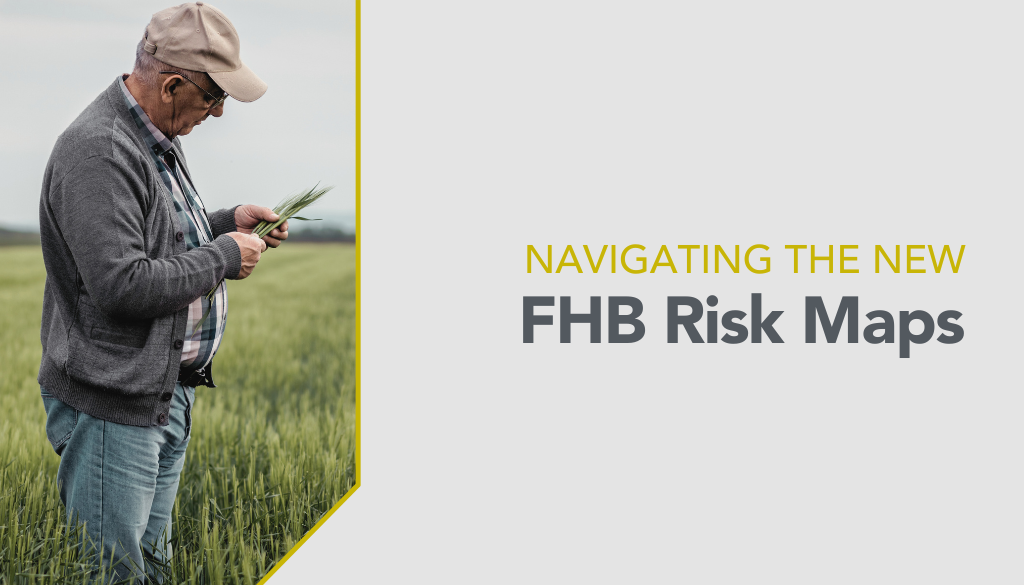
May 15, 2024 (Saskatoon, SK) New Prairie-wide fusarium head blight (FHB) risk maps are now available to producers in Saskatchewan, Alberta and Manitoba (prairiefhb.ca). The tool provides assessment of fusarium head blight index (FHBi), fusarium damaged kernels (FDK), and deoxynivalenol (DON) risk levels in spring wheat, winter wheat, barley and durum based on weather conditions.
These risk maps were created as part of a three-year research project led by the University of Manitoba’s Dr. Paul Bullock, with collaborators from Alberta Ministry of Agriculture and Irrigation, Saskatchewan Ministry of Agriculture, Manitoba Agriculture, Manitoba Crop Alliance (MCA), Saskatchewan Wheat Development Commission (Sask Wheat), Saskatchewan Barley Development Commission (SaskBarley) and Alberta Grains.
“The Faculty is very pleased to release this important risk management tool for the agriculture industry,” said Dr. Martin Scanlon, dean of the faculty of Agricultural and Food Sciences at the University of Manitoba.
“The project is a great example of multi-institutional collaboration, where the combined skills and talents of both federal and provincial agricultural personnel, plus university collaborators, has facilitated research outcomes that could not have been achieved otherwise.”
The weather-based risk is calculated using real-time weather data from more than 500 stations operated by Environment and Climate Change Canada, the Manitoba AgWeather Program, Saskatchewan Public Safety, Alberta Climate Information System and Metos Canada. The risk algorithms are “homegrown” based on research data collected from 600 plot sites across 15 locations in Western Canada each year from 2019 through 2021 and tested in more than 300 producer fields on the Prairies during the same period. Previous FHB risk maps utilized imported FHB risk algorithms with limited accuracy testing and could not assess risk in barley or durum, nor for either FDK or DON. The risk mapping tool is publicly available and accessible using a smartphone, tablet or desktop computer.
The risk for disease severity varies considerably by location and year because of variable weather during the lead-up period prior to flowering. The tool has both financial and environmental benefits, since the need to apply fungicide for disease control at a given location also varies from one extreme to the other.
“This new risk map is the first-time barley growers have been able to view a crop-specific risk map,” said SaskBarley Executive Director, Jill McDonald. “Barley buyers have low tolerance for DON. This tool benefits growers and the industry as a whole. SaskBarley is pleased to collaborate with our partners to make this tool available to growers.”
The project was funded through the Integrated Crop Agronomy Cluster with funding from the Canadian Agriculture Partnership, Agriculture and Agri-Food Canada, Western Grains Research Foundation, MCA, Sask Wheat, Alberta Grains, Brewing and Malting Barley Research Institute and Prairie Oat Growers Association. The FHB risk mapping tool is available at prairiefhb.ca.
For more information on using and interpreting the maps check out our new joint extension document “Newly Developed Prairie-Wide Fusarium Head Blight (FHB) Risk Maps”
For more information:
Serra McSymytz
Communications Manager
Saskatchewan Barley Development Commission
smcsymytz@saskbarley.com
Dr. Paul Bullock
Senior Scholar, Department of Soil Science
University of Manitoba
Paul.Bullock@umanitoba.ca